What is Breast cancer

Overview
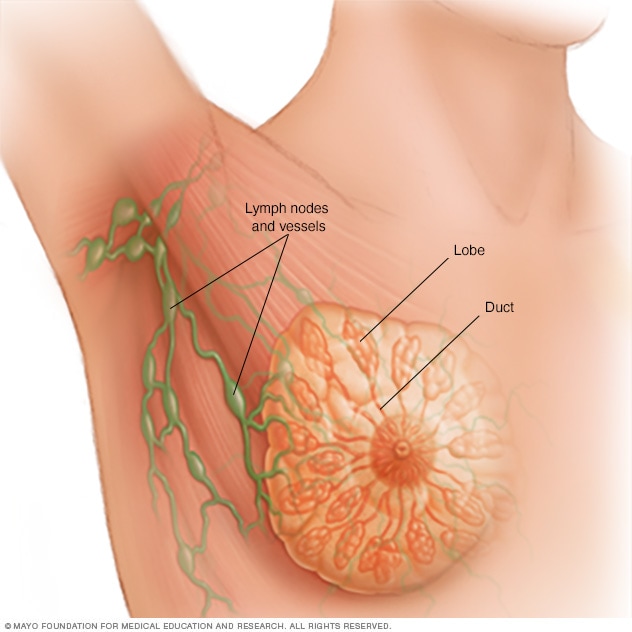
Breast cancer is a kind of cancer that begins as a growth of cells in the breast tissue.
After skin cancer, breast cancer is the most common cancer diagnosed in women in the United States. But breast cancer doesn’t just happen in women. Everyone is born with some breast tissue, so anyone can get breast cancer.
Breast cancer survival rates have been increasing. And the number of people dying of breast cancer is steadily going down. Much of this is due to the widespread support for breast cancer awareness and funding for research.
Advances in breast cancer screening allow healthcare professionals to diagnose breast cancer earlier. Finding the cancer earlier makes it much more likely that the cancer can be cured. Even when breast cancer can’t be cured, many treatments exist to extend life. New discoveries in breast cancer research are helping healthcare professionals choose the most effective treatment plans.
Breast cancer care at Mayo Clinic
Show more products from Mayo Clinic
Symptoms
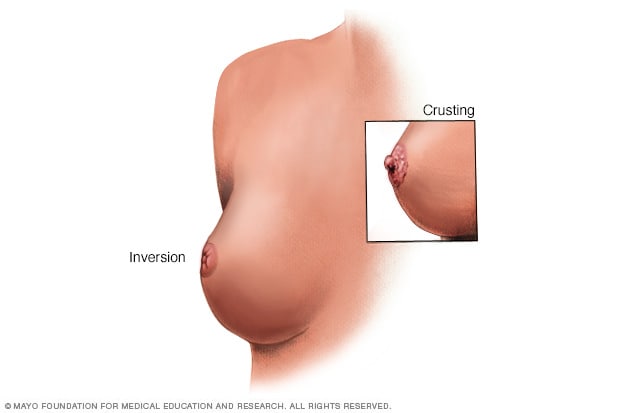
Signs and symptoms of breast cancer may include:
- A breast lump or thickened area of skin that feels different from the surrounding tissue.
- A nipple that looks flattened or turns inward.
- Changes in the color of the breast skin. In people with white skin, the breast skin may look pink or red. In people with brown and Black skin, the breast skin may look darker than the other skin on the chest or it may look red or purple.
- Change in the size, shape or appearance of a breast.
- Changes to the skin over the breast, such as skin that looks dimpled or looks like an orange peel.
- Peeling, scaling, crusting or flaking of the skin on the breast.
When to see a doctor
If you find a lump or other change in your breast, make an appointment with a doctor or other healthcare professional. Don’t wait for your next mammogram to see if the change you found is breast cancer. Report any changes in your breasts even if a recent mammogram showed there was no breast cancer.
Get the latest breast cancer information from Mayo Clinic delivered to your inbox.
Sign up for free and receive the latest on breast cancer treatment, care and management.I would like to learn more about:The latest on newly diagnosed breast cancerUp-to-date information on recurrent breast cancerSpecialized treatment information for high risk breast cancerEmail addressSubscribeLearn more about Mayo Clinic’s use of data.
Causes
The exact cause of most breast cancers isn’t known. Researchers have found things that increase the risk of breast cancer. These include hormones, lifestyle choices and things in the environment. But it’s not clear why some people who don’t have any factors get cancer, yet others with risk factors never do. It’s likely that breast cancer happens through a complex interaction of your genetic makeup and the world around you.
Healthcare professionals know that breast cancer starts when something changes the DNA inside cells in the breast tissue. A cell’s DNA holds the instructions that tell a cell what to do. In healthy cells, the DNA gives instructions to grow and multiply at a set rate. The instructions tell the cells to die at a set time. In cancer cells, the DNA changes give different instructions. The changes tell the cancer cells to make many more cells quickly. Cancer cells can keep living when healthy cells would die. This causes too many cells.
The cancer cells might form a mass called a tumor. The tumor can grow to invade and destroy healthy body tissue. In time, cancer cells can break away and spread to other parts of the body. When cancer spreads, it’s called metastatic cancer.
The DNA changes that lead to breast cancer most often happen in the cells that line the milk ducts. These ducts are tubes designed to carry milk to the nipple. Breast cancer that starts in the ducts is called invasive ductal carcinoma. Breast cancer also can start in cells in the milk glands. These glands, called lobules, are designed to make breast milk. Cancer that happens in the lobules is called invasive lobular carcinoma. Other cells in the breast can become cancer cells, though this isn’t common.
Risk factors
Factors that may increase the risk of breast cancer include:
- If you received radiation treatments to your chest as a child or young adult, yo… Read more
0 Comments