For most everyday uses — cleaning skin before a shot, wiping a thermometer, prepping a finger for a glucose check — Curad alcohol prep pads are the better pick, because each pad is sealed and saturated at 70% isopropyl alcohol.
The rest of this page walks through each one.
Who should read this
Three kinds of readers land on this page. The first is someone managing a health condition at home — diabetes, a thyroid pill, hormone injections — who buys prep pads by the box and wants to know if the cheaper brand is safe.
The second is a caregiver or parent who preps skin for someone else. They care less about price and more about whether a pad is sterile, whether it dries out before use, and whether the packaging holds up in a bag or drawer.
What actually decides the winner
Alcohol strength matters most. Both brands sell 70% isopropyl alcohol pads, and 70% is the concentration the CDC recommends for routine skin antisepsis.
Sterility is second. Curad sells both sterile and non-sterile prep pads, and the box says which. If you’re prepping skin before breaking it — an injection, a lancet — you want the word “sterile” on the box.
Pad size is third, and it’s the one people get wrong most often. A pad that’s too small means you use two, which erases the price advantage.
Then comes packaging. Individually wrapped foil keeps alcohol in; a box of loose pads dries out once opened. If you buy in bulk, check whether each pad has its own wrapper.
Finally, count per box.
How to choose and use a pad
- Check the label for “70% isopropyl alcohol.” If it says 70%, the pad meets the standard for routine skin prep. If it says 91% or 99%, it isn’t a 70% skin-prep pad — buy a 70% pad instead.
- Look for the word “sterile” if you’re prepping skin before a needle, lancet, or any break in the skin. Non-sterile pads are fine for cleaning intact skin.
- Open one pad and feel it. A good pad is damp, not dripping. If it feels dry, the box is old or the wrapper failed.
- Wipe the site for about 30 seconds. Let it air dry for another 30 seconds before the needle goes in. Don’t blow on it.
- Use one pad per site. Don’t wipe twice with the same pad — you’re moving bacteria back onto clean skin.
- Seal the box or wrapper after each use. Foil wrappers stay good until opened; loose pads in an open box dry out within weeks.
- Store at room temperature, away from heat and direct sun. Alcohol evaporates faster in a hot car.
- Check the expiration date on the box. Expired pads may no longer be guaranteed sterile, and an opened wrapper lets alcohol evaporate.
The judgement call is sterility versus cost. If you’re prepping skin for a needle, pay for sterile pads. If you’re wiping a thermometer or cleaning a phone screen, non-sterile is fine and cheaper.
Which pad fits your situation
| Your situation | What to buy | What it takes | What to watch |
|---|---|---|---|
| Daily insulin injections | Sterile 70% pads, 100 count | About $5–8 per box | Check “sterile” on box |
| Occasional first aid | Non-sterile 70% pads | Under $5 per box | Seal after opening |
| Travel kit | Individually wrapped pads | Slightly higher per pad | Foil must be intact |
| Cleaning devices | Any 70% pad | Lowest cost per pad | Don’t use on screens |
| Bulk home use | 200+ count box | Best per-pad price | Store away from heat |
| Sensitive skin | 70% pads, no additives | Similar cost | Avoid fragranced pads |
What experienced users do differently
They read the box, not the brand
Experienced buyers ignore the brand name and read three things: the alcohol percentage, the word “sterile,” and the pad dimensions. A 70% sterile pad from either brand does the same job.
They buy the right count for their use
Someone doing two injections a day goes through about 60 pads a month, so a 100-count box lasts under two months. Buying 200-count boxes cuts the per-pad cost. But if you use one pad a week, a big box dries out before you finish it — smaller boxes are the smarter buy.
What goes wrong, and what to do
| What you notice | What it usually means | What to do first | How to stop it happening again |
|---|---|---|---|
| Pad feels dry | Wrapper failed or box is old | Open a fresh pad | Check expiration date |
| Skin stings after wipe | Alcohol on broken skin | Rinse with water | Don’t wipe open cuts |
| Pad tears when opening | Thin foil or rough handling | Tear at the notch | Open slowly at the marked edge |
| Box smells weak | Alcohol evaporated | Replace the box | Seal box after each use |
| Redness after use | Skin sensitivity | Stop using, rinse | Switch to non-alcohol prep |
| Pad too small for site | Wrong size bought | Use two pads | Buy larger pads next time |
What the standards say
The CDC’s guidance on skin preparation for injections calls for 70% isopropyl alcohol applied and allowed to dry. The CDC injection safety guidance is the reference most clinics follow. The FDA regulates alcohol prep pads as over-the-counter antiseptic drug products, so a box marked “sterile” has to meet that standard. If you’re prepping skin for a procedure at home, follow the instructions your nurse or pharmacist gave you — those override any general guidance here.
What it costs you
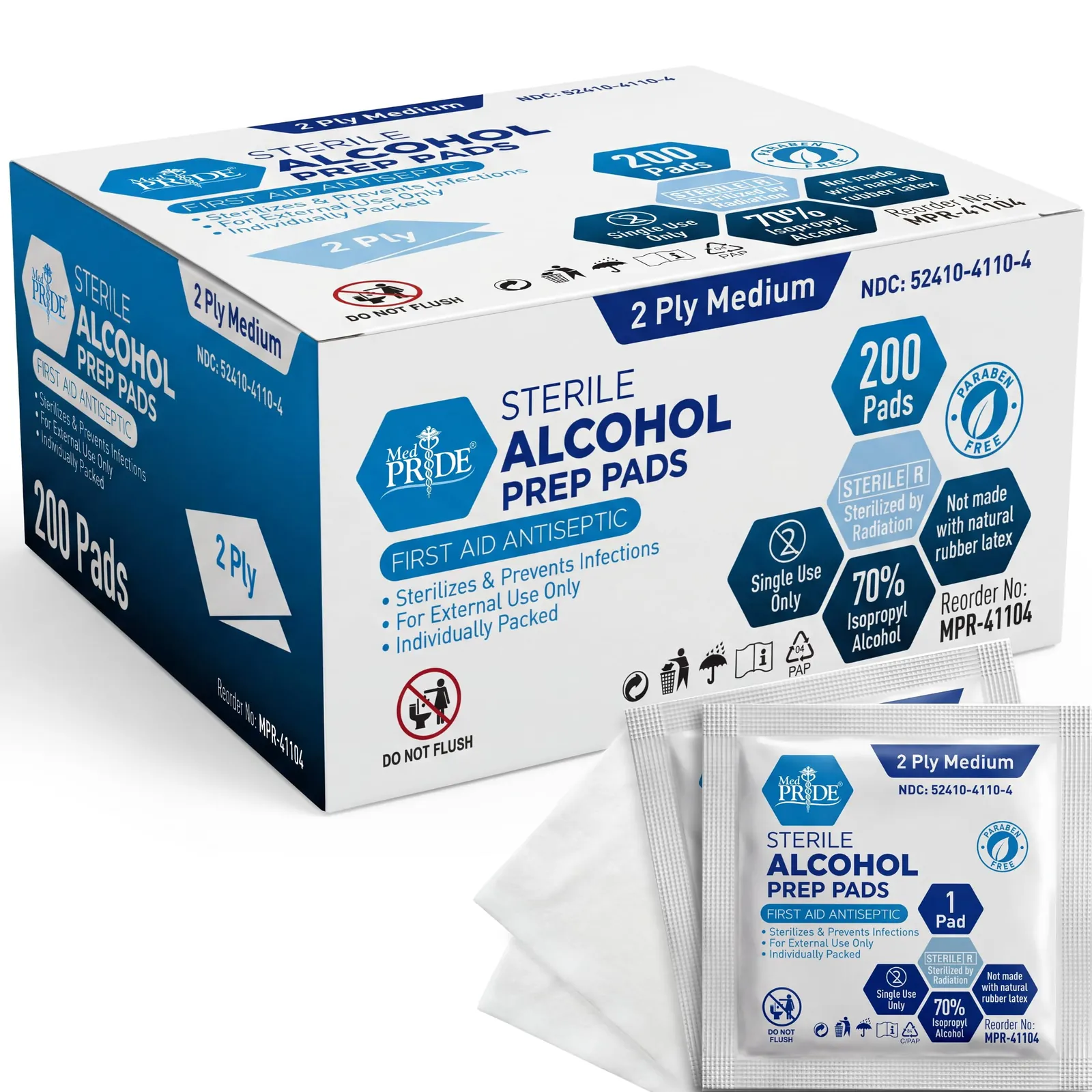
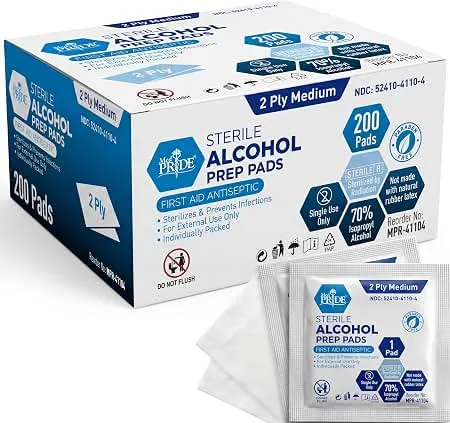
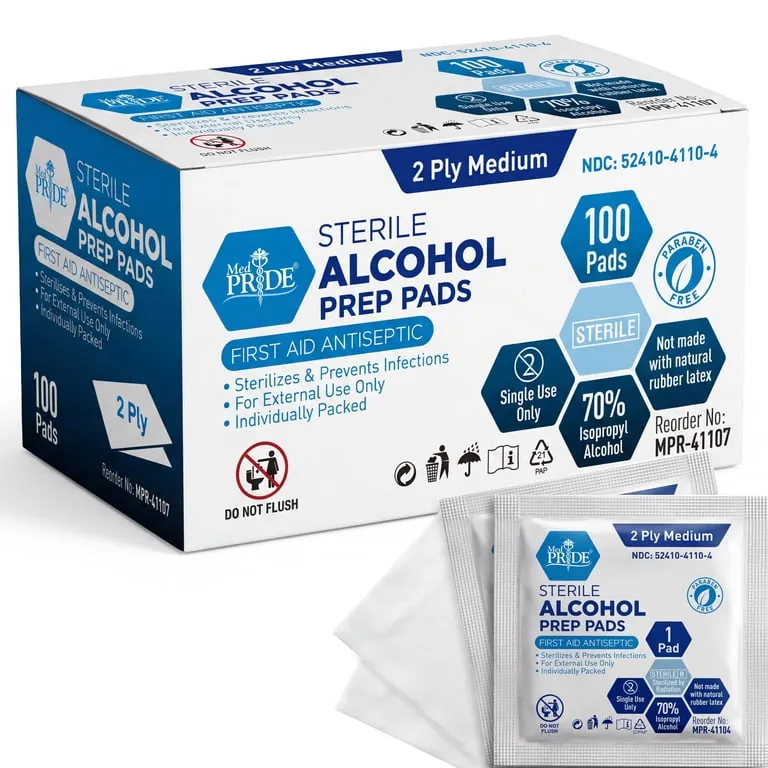
A 100-count box of Med Pride 70% pads typically runs a few dollars; Curad usually costs a bit more per box for the same count. The real cost driver isn’t the brand — it’s how many pads you throw away because they dried out. Buying a box you’ll finish in under three months costs less than a bulk box that goes stale.
Keeping pads usable
Store boxes at room temperature, away from sinks, stoves, and sunny windows. Once a box is open, seal it or move pads into a zip bag. A pad that feels dry, smells weak, or crumbles when you open it’s past its useful life — replace it.
When these pads aren’t the right choice
Skip alcohol prep pads if you’re prepping skin for surgery, if the person has a known alcohol allergy, or if you’re cleaning a wound rather than intact skin. For alcohol sensitivity, ask a pharmacist about chlorhexidine or plain soap and water.
Frequently asked questions
Is Med Pride as good as Curad?
Yes for routine skin prep — both sell 70% isopropyl pads that meet the same standard. Curad has broader retail availability and clearer sterile labeling. Med Pride usually costs less per pad.
Are alcohol prep pads sterile?
Only if the box says “sterile.” Many prep pads are non-sterile and fine for intact skin. For injections or lancets, check the label before you buy.
Can I use expired alcohol prep pads?
Not recommended — the sterile guarantee has expired. Check the date on the box. If it’s past, replace the box rather than risk a non-sterile wipe.
How long do alcohol prep pads last?
Once a box is opened, loose pads dry out within weeks.
What percentage alcohol should prep pads be?
70% isopropyl alcohol is the standard for skin prep. Higher concentrations evaporate too fast and coagulate surface proteins before they can penetrate. Check the percentage on the box, not the brand.
Is it safe to use alcohol pads on a baby?
Only on intact skin, and only if your pediatrician says it’s okay. Alcohol stings on broken skin. For newborn cord care, follow your doctor’s instructions instead.
Does it matter which brand I buy?
Not much, if both are 70% and sterile. What matters is pad size, count per box, and whether the wrapper keeps the pad damp until you use it.
Can I use these pads on my face?
No — 70% alcohol is too harsh for facial skin and strips natural oils. Use a gentle facial cleanser instead. Keep prep pads for skin prep before needles.
Start with the box in your hand
Read the label on the box you already have — check the percentage, the word “sterile,” and the expiration date. If it passes all three, you’re set. Expect a clean, dry wipe that dries in about 30 seconds. If the pad feels dry or the skin stings badly, stop and ask a pharmacist.
{“@context”:”https://schema.org”,”@type”:”FAQPage”,”mainEntity”:[{“@type”:”Question”,”name”:”Is Med Pride as good as Curad?”,”acceptedAnswer”:{“@type”:”Answer”,”text”:”Yes for routine skin prep — both sell 70% isopropyl pads that meet the same standard. Curad has broader retail availability and clearer sterile labeling. Med Pride usually costs less per pad.”}},{“@type”:”Question”,”name”:”Are alcohol prep pads sterile?”,”acceptedAnswer”:{“@type”:”Answer”,”text”:”Only if the box says \”sterile.\” Many prep pads are non-sterile and fine for intact skin. For injections or lancets, check the label before you buy.”}},{“@type”:”Question”,”name”:”Can I use expired alcohol prep pads?”,”acceptedAnswer”:{“@type”:”Answer”,”text”:”Not recommended — the sterile guarantee has expired. Check the date on the box. If it’s past, replace the box rather than risk a non-sterile wipe.”}},{“@type”:”Question”,”name”:”How long do alcohol prep pads last?”,”acceptedAnswer”:{“@type”:”Answer”,”text”:”Once a box is opened, loose pads dry out within weeks.”}},{“@type”:”Question”,”name”:”What percentage alcohol should prep pads be?”,”acceptedAnswer”:{“@type”:”Answer”,”text”:”70% isopropyl alcohol is the standard for skin prep. Higher concentrations evaporate too fast and coagulate surface proteins before they can penetrate. Check the percentage on the box, not the brand.”}},{“@type”:”Question”,”name”:”Is it safe to use alcohol pads on a baby?”,”acceptedAnswer”:{“@type”:”Answer”,”text”:”Only on intact skin, and only if your pediatrician says it’s okay. Alcohol stings on broken skin. For newborn cord care, follow your doctor’s instructions instead.”}},{“@type”:”Question”,”name”:”Does it matter which brand I buy?”,”acceptedAnswer”:{“@type”:”Answer”,”text”:”Not much, if both are 70% and sterile. What matters is pad size, count per box, and whether the wrapper keeps the pad damp until you use it.”}},{“@type”:”Question”,”name”:”Can I use these pads on my face?”,”acceptedAnswer”:{“@type”:”Answer”,”text”:”No — 70% alcohol is too harsh for facial skin and strips natural oils. Use a gentle facial cleanser instead. Keep prep pads for skin prep before needles.”}}]}
0 Comments