To use exercise bands effectively, you should perform 2 to 4 sets of 10 to 15 repetitions for each movement, keeping your motion slow and controlled to maintain tension throughout the entire range of movement. Start with a light resistance level, focus on your form, and increase the tension only when you can complete your full set without losing your balance or snapping the band.
How to Perform Exercises With Resistance Bands
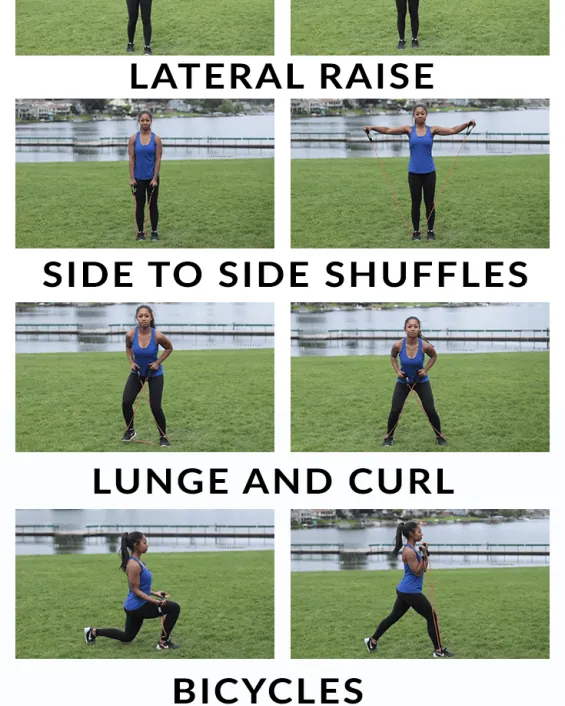
You don’t need a gym to build strength because these portable tools provide constant resistance that challenges your muscles in both directions. Follow these steps to ensure you’re using them safely and effectively for a full-body workout.
- Secure the band firmly: If you’re using a closed-loop band, step on the center with both feet to anchor it, or wrap it around a stable, heavy object like a sturdy post or a closed door.
- Check for damage: Before you begin, stretch the band slightly to look for small tears, cracks, or white stress marks that might cause the material to snap during your session.
- Maintain a neutral posture: Keep your spine straight and your core muscles tight throughout every movement to prevent straining your lower back while the band is under tension.
- Control the movement: Move slowly through the entire range of motion, taking about 2 seconds to pull the band and 3 seconds to return to the starting position.
- Adjust your grip: If the resistance feels too light, move your hands closer to the anchor point or step wider to shorten the distance the band must stretch.
- Focus on the muscle: Don’t let the band snap back to the start; keep tension on it even as you return to your resting position to ensure your muscles work during the entire repetition.
Tip: Start with the lightest band in your set to learn the movement pattern, then move to a heavier version only once you can complete your reps with perfect control.
Resistance Levels and Expected Timing
The amount of tension you need depends on your current fitness level and the specific muscle group you’re training. Most manufacturers use color coding to distinguish between resistance levels, though these colors vary by brand.
| Resistance Level | Typical Use | Repetition Goal | Rest Between Sets |
|---|---|---|---|
| Extra Light | Warm-ups, recovery | 15–20 | 30 seconds |
| Medium | General strength | 10–15 | 60 seconds |
| Heavy | Muscle building | 8–12 | 90 seconds |
Test your baseline by performing a set of twelve repetitions with a medium band. If you finish the final rep with perfect form and ease, you may consider increasing the resistance to continue challenging your muscles.
Avoid the common mistake of choosing a band that forces you to compensate with momentum. If your torso rocks or your joints lock to complete the movement, the resistance is too high. Drop back one level to ensure the tension remains on the muscle fibers.
If you feel sharp pain in your tendons, stop immediately. This indicates the resistance is too aggressive for your current connective tissue strength. Switch to a lighter band and increase your repetition count until your stability improves.
Is It Safe to Do This Yourself?
Using bands is a safe way to train if you follow basic precautions, but you must avoid common mistakes that lead to injury. The American Council on Exercise recommends inspecting equipment before every use to ensure there are no signs of wear.
Never wrap the band around your neck or head, and always ensure the anchor point is immovable, as bands that slip can snap back toward your body with significant force. If you feel sharp pain in your joints or experience dizziness, stop your session immediately and check your form or switch to a lighter resistance level.
Common Mistakes That Ruin Your Progress
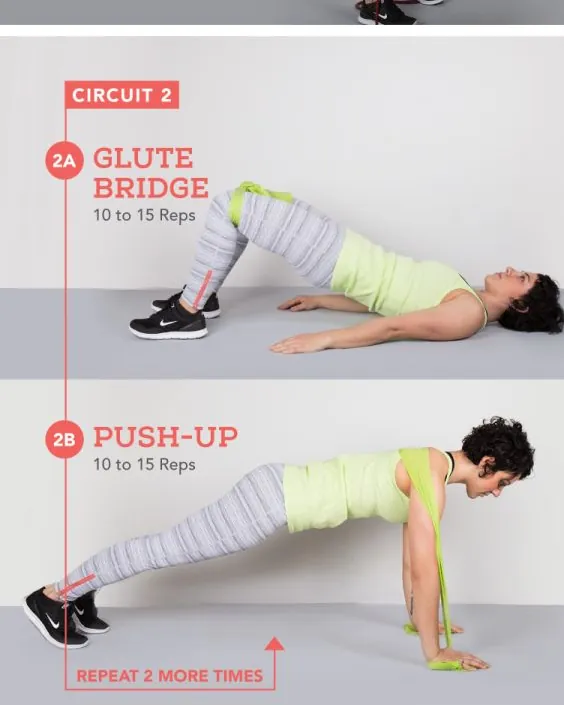
Many people make small errors that prevent them from getting the most out of their workout. Avoid these common pitfalls to stay safe and see better results:
- Jerking the movement: Using momentum makes the exercise easier, but it removes the constant tension that makes bands effective for muscle growth.
- Ignoring the anchor: Attaching a band to a flimsy piece of furniture or a door that isn’t locked can lead to the band flying off and causing an impact injury.
- Overstretching the material: Pulling a band beyond its intended length significantly increases the risk of it snapping, which can cause painful welts or lacerations if it hits your skin.
- Poor alignment: If you don’t keep your joints aligned, such as letting your knees cave inward during a squat, you shift the stress away from your muscles and onto your ligaments.
Related guides
- What Diabetic Crew Socks Do to Protect Your Feet | Health Notation
- What Are Diabetic Crew Socks and How Do They Help? | Health Notation
- Mindfulness exercises
Frequently Asked Questions
Can I use exercise bands every day?
You can use them daily for light mobility or stretching, but you should allow 24 to 48 hours of rest for specific muscle groups after a strength-focused session. This recovery time is essential for your muscles to repair and grow stronger after the stress of resistance training.
What should I do if the band slips?
If a band slips during an exercise, immediately release the tension and check your anchor point to ensure it’s secure. Never try to catch a slipping band mid-air, as this can lead to awkward movements or accidental snaps against your skin that cause bruising.
Are all bands the same thickness?
No, bands vary in thickness and width, which directly changes the amount of force required to stretch them. Thicker bands provide more resistance, so you should always verify the resistance rating printed on the band or check the manufacturer’s guide before starting a new exercise.
Conclusion
Choose a consistent time each week to focus on your form rather than the amount of weight you move. Once you feel comfortable with these movements, try adding a 1-second pause at the peak of each repetition to increase the time your muscles spend under tension.
{“@context”:”https://schema.org”,”@type”:”FAQPage”,”mainEntity”:[{“@type”:”Question”,”name”:”Can I use exercise bands every day?”,”acceptedAnswer”:{“@type”:”Answer”,”text”:”You can use them daily for light mobility or stretching, but you should allow 24 to 48 hours of rest for specific muscle groups after a strength-focused session. This recovery time is essential for your muscles to repair and grow stronger after the stress of resistance training.”}},{“@type”:”Question”,”name”:”What should I do if the band slips?”,”acceptedAnswer”:{“@type”:”Answer”,”text”:”If a band slips during an exercise, immediately release the tension and check your anchor point to ensure it’s secure. Never try to catch a slipping band mid-air, as this can lead to awkward movements or accidental snaps against your skin that cause bruising.”}},{“@type”:”Question”,”name”:”Are all bands the same thickness?”,”acceptedAnswer”:{“@type”:”Answer”,”text”:”No, bands vary in thickness and width, which directly changes the amount of force required to stretch them. Thicker bands provide more resistance, so you should always verify the resistance rating printed on the band or check the manufacturer’s guide before starting a new exercise.”}}]}

0 Comments